If your car won’t start but lights turn on, you’re not alone, and it doesn’t automatically mean the battery is “fine.” Interior lights, dash lights, and even a radio can work with a weak battery, while the starter needs a lot more power to crank the engine.
We’re Top Dogz Towing Company, and we help drivers around Charlotte and nearby suburbs when a no-start turns into a roadside problem. If you’re stuck and need a jump start or help deciding what’s next, you can reach us at (704) 774-8669. Before you call, this guide will help you narrow down the likely cause and avoid common mistakes.
Quick answer: the most common reasons this happens
When the lights come on but the engine won’t start, the usual suspects are:
- Weak battery: enough power for lights, not enough to crank the starter.
- Loose or corroded battery terminals: power is there, but it can’t flow well under load.
- Starter or starter relay problem: the battery may be okay, but the starter circuit isn’t doing its job.
- Bad ground cable/connection: causes clicking, intermittent starts, or weird resets.
- Key/immobilizer issue: especially on push-button starts or chipped keys.
- Gear selector or clutch safety switch: the car won’t crank unless it “sees” Park/Neutral or the clutch pressed.
The key is to match your symptom to the most likely cause.
Safety and setup before you troubleshoot
A few quick habits make troubleshooting safer and prevent extra damage:
- Park safely. Put the vehicle in Park (or Neutral for a manual), set the parking brake, and turn on hazard lights if you’re near traffic.
- Avoid repeated cranking. If the engine doesn’t start, don’t keep trying over and over. You can drain the battery further and overheat the starter.
- Pay attention to what happens when you try to start:
- Does it click rapidly?
- Is there one loud click?
- Does it crank slowly?
- Does it crank normally but won’t fire?
Those details matter more than most people think.
Diagnose by sound and behavior (fast symptom guide)
Rapid clicking
Rapid clicking when you turn the key or push the start button usually points to low battery voltage or poor battery connections. The starter solenoid tries to engage, voltage drops, it releases, then repeats.
One solid click
One click can mean:
- The battery is weak and can’t provide enough current, or
- The starter solenoid is engaging but the starter motor isn’t turning, or
- There’s a starter relay or wiring issue.
Slow cranking
Slow, tired cranking commonly points to:
- Weak battery
- High resistance at terminals (corrosion or looseness)
- Aging battery cables or poor ground connection
Temperature can play a role too, but don’t assume weather is the whole story.
No crank, no click (but lights are on)
If you get silence when you try to start, yet the lights work, consider:
- The vehicle isn’t detecting Park/Neutral
- A clutch safety switch issue (manual)
- An immobilizer/security system issue
- A blown fuse/relay in the starter circuit (varies by vehicle)
Cranks normally but won’t start
If it cranks at normal speed but doesn’t catch, that’s often not a jump-start situation. It can be fuel delivery, ignition, a sensor issue, or another engine management problem. A jump may still help if the battery is weak, but it’s not the most likely fix.
Step-by-step checks you can do in minutes (no special tools)
Start with the simplest, least invasive steps.
Make sure it’s in Park/Neutral (and press the brake)
- For automatics: confirm it’s fully in Park.
- Press the brake pedal firmly.
- Try starting in Neutral. Sometimes a misadjusted shifter or neutral safety switch will allow starting in Neutral even when Park doesn’t.
For manuals: press the clutch fully and try again
Make sure the clutch is fully depressed and the shifter is in Neutral. If the clutch switch isn’t being triggered, the car may not crank.
Check battery terminals for looseness or corrosion
Pop the hood if you can and look at the battery terminals:
- Corrosion often looks like white, blue, or green crust around the terminal.
- Loose terminals may look “fine,” but still move.
If you can safely reach them with the engine off, try gently moving each terminal clamp by hand. You’re not trying to remove anything, just checking whether it’s obviously loose. If it twists or wiggles easily, that can be your whole problem.
If you’re not comfortable working around a battery, skip this step and get help. Batteries can produce gas and current, and tools can short things if used carelessly.
Try powering down and starting properly
Turn off everything that draws power:
- Headlights
- Cabin fan
- Heated seats
- Phone chargers
Then wait about 30 seconds and try starting again. This won’t fix a dead battery, but it can help when the battery is borderline.
Try a second key or basic fob troubleshooting
If you have a spare key or spare fob, try it.
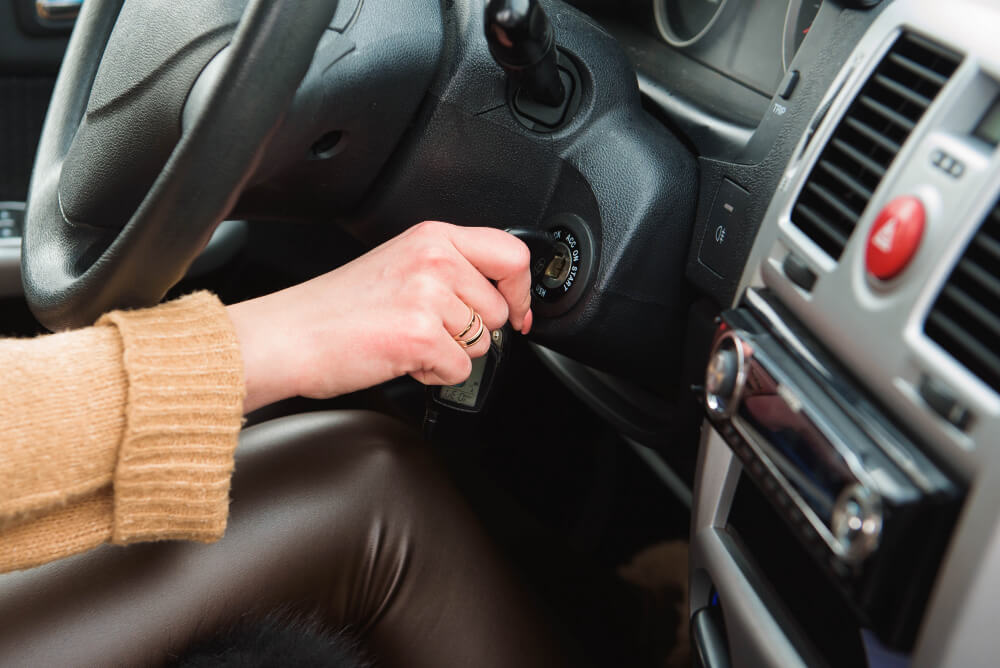
For push-button starts, a dead fob battery can sometimes prevent starting even though the vehicle lights up. Many vehicles have a backup method to detect the fob at close range. The exact process varies by model, so check your owner’s manual. If the security/immobilizer light behaves differently than usual, that’s a clue.
Is it the battery even if the lights work?
Yes, it can be. Here’s the simple reason: starting requires much more current than running lights. Lights might draw a few amps. A starter can demand a very large burst of current. A weak battery can still power the dash but collapse under the heavy load of cranking.
Signs it’s likely battery or connection related:
- Rapid clicking
- Slow cranking
- Dash lights dim significantly when you try to start
- The clock/radio resets
- It started fine yesterday but suddenly struggles today
Signs it may not be the battery:
- Strong, normal cranking speed with no start
- No click/no crank in Park but it starts in Neutral (points more to a safety switch)
- Intermittent “nothing happens” with good battery voltage (points more to a relay, wiring, or starter issue)
If you suspect the battery: jump-start decision + safe basics
A jump start makes sense when the symptoms suggest low battery power or poor connection.
A jump start is often appropriate if:
- You hear rapid clicking
- The engine cranks slowly
- Accessories work but the starter won’t turn the engine
Do not attempt a jump start if:
- The battery case looks cracked, swollen, or leaking
- You smell a strong sulfur or “rotten egg” odor near the battery
- You see smoke or signs of melting around the terminals or cables
Those are situations where it’s safer to stop and get professional help.
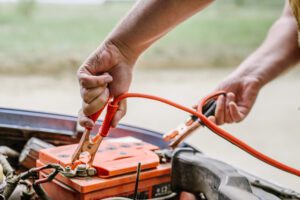
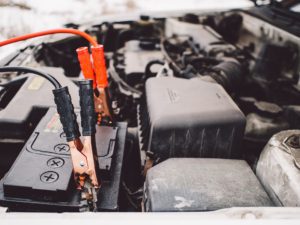
If you do jump-start, follow the instructions for your vehicle and your jump pack/cables. Different vehicles can have under-hood jump points, and hybrids or some newer systems may have specific procedures. When in doubt, check the owner’s manual.
If it starts but dies right after the jump
If the car starts with a jump and then stalls soon after, it can suggest:
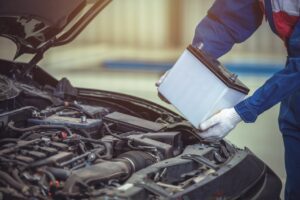
- The battery is extremely weak and can’t support the vehicle once the booster is removed
- There’s a charging system problem (like the alternator not charging)
- A cable/terminal connection is still poor
That’s a sign to stop guessing and get the system checked rather than repeatedly jumping it.
If it’s not the battery: common non-battery culprits
Starter motor or solenoid issues
A starter can fail in a way that produces one click but no cranking. Sometimes it’s intermittent at first. If you have consistent “one click, no crank” and the battery seems strong, the starter circuit becomes more likely.
Starter relay or fuse
Some no-crank situations involve a relay or fuse, but locations and labels vary widely by vehicle. If you don’t know exactly what you’re looking at, don’t swap random parts. Use the owner’s manual fuse diagram as your guide.
Bad ground strap or cable connection
A poor ground can create confusing symptoms: clicking, dimming, or electronics behaving oddly. Grounds and cables can also be disturbed after repairs or corrosion buildup.
Immobilizer/security system
If the car thinks the wrong key is being used, it may crank and die or refuse to crank at all, depending on the vehicle. Watch for a security indicator behaving differently than normal.
Park/Neutral switch or clutch switch
If it won’t crank in Park but will crank in Neutral, that points toward a gear position detection problem rather than a weak battery.
When to stop troubleshooting and get roadside help
Call for help when:
- Your attempts aren’t changing the symptom
- You notice burning smells, smoke, or battery swelling/leaking
- You’re in an unsafe spot (busy roads, narrow shoulder, poor visibility)
- The car cranks normally but won’t start and you need a plan to avoid draining the battery
This is also where a car jumpstart service can be a practical next step. A jump start can confirm whether low battery power is the main issue. And if it turns out to be a starter or engine problem instead, you can avoid wasting time and protect the vehicle by arranging towing.
Prevention tips to reduce repeat no-starts
- Keep battery terminals clean and tight (have them serviced if you’re unsure).
- If you needed multiple jumps in a short period, get the battery and charging system checked.
- Don’t leave accessories plugged in when the car is off if they draw power.
- If you keep a portable jump starter, recharge it regularly so it’s ready when you need it.
Conclusion
When your car won’t start but lights turn on, the most common causes are a weak battery or poor battery terminal connections, followed by starter circuit issues and safety/immobilizer conditions. Use the sound and behavior clues to guide your next step, and avoid repeated cranking or forcing anything that could make the problem worse.
If you’re stuck in Charlotte or the surrounding suburbs and need help, we’re Top Dogz Towing Company. Call us at (704) 774-8669 and we’ll help you figure out whether a jump start is likely to get you going or whether it’s time to switch to a safer next step.