
As a leading towing and roadside assistance provider in Charlotte, we at Top Dogz Towing Company often encounter vehicles broken down due to poor maintenance. Inadequate oil changes are a common culprit. While we’re always here to help when you’re stranded with car troubles at (704) 774-8669, we believe in empowering our customers with knowledge that could prevent future breakdowns.
Learning how to change car oil is one of those essential skills that could save you from an unexpected roadside emergency. Whether you’re looking to save money on maintenance or simply want to understand your vehicle better, this comprehensive guide will walk you through the process of changing your car’s oil safely and effectively.
Why Learning How to Change Car Oil Matters
Before diving into the process of changing your car oil, it’s important to understand why this skill is valuable. Regular oil changes extend engine life, improve fuel efficiency, and help prevent costly repairs. While professional services are readily available, knowing how to change car oil yourself gives you more control over your vehicle’s maintenance schedule and can save hundreds of dollars annually. Fresh oil ensures proper engine lubrication, reduces friction between moving parts, and helps maintain optimal engine temperature.
Essential Supplies for Changing Your Car Oil
A successful oil change starts with the right equipment. Your owner’s manual specifies the correct oil type and amount needed for your vehicle. Gather these essential items:
New oil (typically 4-6 quarts depending on engine size), a matching oil filter, and basic tools including an oil filter wrench and socket set. You’ll also need safety equipment such as jack stands, wheel chocks, and work gloves. A large drain pan and funnel are crucial for managing oil disposal and refills without spills. It’s also wise to have plenty of shop rags or paper towels handy for cleaning up any unexpected spills.
Safe Vehicle Preparation: The First Step in Changing Car Oil
Safety comes first when changing your car oil. Park on a completely level surface and engage your parking brake. Position wheel chocks behind the rear tires to prevent movement. Using your car’s designated jack points, lift the vehicle carefully and secure it with jack stands.
Never rely solely on a jack during maintenance work – proper support is essential for your safety. Take time to ensure your workspace is well-lit and you have enough room to move around comfortably.
The Complete Oil Change Process
Warming and Draining
Start your engine for 2-3 minutes to warm the oil, making it flow more easily during drainage. After turning off the engine, locate the drain plug underneath the vehicle.
Position your drain pan carefully, then remove the plug, allowing all oil to drain completely – this usually takes 5-10 minutes. Watch the color and consistency of the draining oil; this can provide valuable information about your engine’s health.
Filter Replacement and New Oil Installation
While the old oil drains, remove and replace the oil filter. Apply a thin layer of fresh oil to the new filter’s rubber gasket before installation. Hand-tighten only – over-tightening can cause damage.
Once the oil has finished draining, clean and replace the drain plug with appropriate torque. Many modern vehicles have specific torque specifications for the drain plug, so consult your manual if you’re unsure.
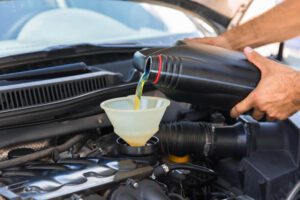
From the engine bay, remove the oil filler cap and carefully add new oil using your funnel. Check the dipstick periodically to avoid overfilling.
Most vehicles require 4-6 quarts, but always verify the exact amount in your owner’s manual. Add oil slowly and check levels frequently to prevent overfilling, which can be just as harmful as running low on oil.
Final Checks and Testing
After completing your oil change, start the engine and let it run for about a minute. Check carefully for leaks around the drain plug and filter.
Shut off the engine, wait a few minutes, then check the oil level one final time with the dipstick. Add oil if needed to reach the proper level. Pay attention to any unusual sounds or smells during this test run.
Environmental Responsibility and Oil Disposal
Proper disposal of used oil is crucial for environmental protection. Most auto parts stores accept used oil for recycling at no charge. Store old oil in sealed containers and transport carefully to avoid spills.
Never dispose of oil in regular trash or pour it on the ground – this is both harmful and illegal. One gallon of improperly disposed oil can contaminate up to one million gallons of drinking water.
When to Call the Professionals
While knowing how to change car oil is valuable, sometimes professional help is necessary. If you encounter any of these situations, contact experienced technicians:
- Unusual resistance when removing parts
- Metal shavings in old oil
- Uncertainty about any step in the process
- Limited access to proper tools or workspace
At Top Dogz Towing Company, we’re here to help Charlotte drivers maintain their vehicles properly. Whether you need guidance on how to change car oil or prefer professional service, call us at (704) 774-8669.
Maintaining Your Oil Change Schedule
While regular oil changes are crucial, don’t forget to check your other vital fluids – coolant, brake, power steering, and transmission fluid. These simple checks can prevent unexpected breakdowns and expensive repairs.
If you find yourself stranded in Charlotte, whether from oil-related issues or any other vehicle emergency, Top Dogz Towing is here 24/7. Call us at (704) 774-8669 for immediate assistance. Remember, prevention through regular maintenance is always better than dealing with a breakdown.